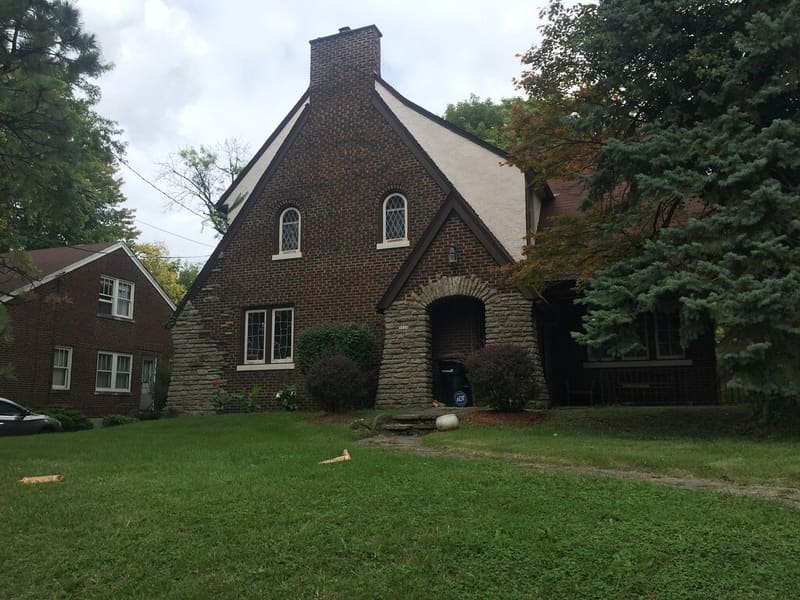
Easton hill sections and river-valley wind can turn an ordinary rainfall into a side-driven test of the roof. On College Hill older homes, that water may meet masonry chimneys, slate, dormers, and metal that has moved through many freeze-thaw cycles. The visible stain can sit downslope from the opening or appear only when gusts press rain against one side. An inspection should begin with exposure, material, and timing rather than assuming the shingle directly above the room has failed.
Call (610) 492-6917 when water enters during wind, slate or cap material reaches the ground, or an old chimney repair begins staining again. The serving independent Pennsylvania contractor can photograph the relevant elevations and provide a written repair scope.
Masonry flashing has to drain, move, and remain accessible
Chimney and wall flashing is a layered system, not a bead of surface sealant. Metal beside the roof must guide water onto the covering, while the upper counter-detail keeps water from entering behind it. Movement at masonry, an open lap, buried step pieces, or a weak corner can admit water that travels before showing indoors. The inspection should examine all sides, including the uphill area where runoff collects.
A lasting repair may require carefully opening surrounding roofing, replacing failed metal, and tying the new pieces back into sound slate or shingles. Sealant may have a limited role at specific joints, but spreading it over unknown layers can hide the path and make later work harder. Photos before and after opening help the homeowner see why the flashing scope is larger than the indoor mark.
River-valley wind can reveal defects on one elevation
Wind pressure can lift a shingle edge, loosen a ridge cap, or drive rain across a flashing lap that sheds straight-down water without trouble. Hill exposure means the affected side may differ from the protected roof plane. Tell the contractor which rooms became wet and what side faced the weather. That pattern guides inspection but still needs exterior confirmation because water can travel along decking and framing.
Storm documentation should show location, close condition, and the neighboring roof surface. It should distinguish a new opening from longstanding wear and identify any immediate dry-in need. Insurance decisions remain with the insurer, so the contractor role is to document what can be observed and price the construction scope without deductible promises or guaranteed outcomes.
Compare a localized Easton repair with the remaining roof
A slipped slate, chimney side, pipe boot, or small wind-lifted field can be repairable when surrounding material is secure. The scope should state how the patch integrates with the existing roof and whether matching material is available. On slate, safe access is part of the work because careless walking can damage pieces that were sound before the visit.
Replacement becomes a stronger option when failures are scattered, asphalt cracks during normal handling, or sheathing is soft in multiple locations. Ask for photographs that show the roof-wide condition, not just the worst close-up. If both paths remain realistic, the proposal should explain the benefit and limits of the focused repair separately from a full replacement estimate.
For scheduling, call (610) 492-6917. Bethlehem Roof Pros routes the request to an independent Pennsylvania roofing contractor serving Bethlehem and nearby Lehigh Valley communities.